Standing leg exercises are foundational for overall fitness, enhancing strength, balance, and stability – crucial as we age, impacting cognitive health positively.
These exercises, utilizing bodyweight or minimal equipment, build functional strength, improving daily activities like walking and maintaining independence, benefiting all ages.
A standing leg exercises PDF can structure workouts, providing clear guidance and progression, making it accessible for various fitness levels and goals.
Focusing on single-leg stability is paramount, challenging balance and proprioception, translating to improved athletic performance and reduced risk of falls.
Leg strength supports the entire body, contributing to better posture, reduced joint stress, and increased energy levels, making them a vital component.
Whether you’re a seasoned athlete or just starting your fitness journey, incorporating these exercises will yield significant benefits for your physical well-being.
This guide will explore a range of exercises, from warm-ups to advanced movements, helping you create a comprehensive and effective leg workout routine.
Benefits of Standing Leg Exercises
Standing leg exercises offer a multitude of benefits extending far beyond simply toned muscles. They are instrumental in building functional strength, directly impacting daily life activities like walking, climbing stairs, and maintaining balance – particularly vital as we age.
A well-structured standing leg exercises PDF can guide you through progressive overload, maximizing these benefits. Improved balance reduces the risk of falls, a significant concern for older adults, while enhanced stability supports joint health and prevents injuries.
These exercises strengthen the core, as maintaining proper form requires constant engagement of abdominal and back muscles. This contributes to better posture and reduced lower back pain. Furthermore, leg strength positively influences cognitive function, potentially boosting memory and brain health.
By challenging proprioception – your body’s awareness of its position in space – standing leg work improves coordination and agility. This translates to better athletic performance and increased confidence in movement. Incorporating these exercises into your routine is an investment in long-term health and well-being.
Ultimately, strong legs form the foundation for a healthy, active lifestyle, enabling you to enjoy life to the fullest.
Why Focus on Single-Leg Stability?
Single-leg stability is often overlooked, yet it’s a cornerstone of functional movement and overall health. Our daily lives are filled with moments of single-leg support – walking, running, even simply stepping off a curb. Training this ability is crucial for preventing falls and injuries.
A comprehensive standing leg exercises PDF should prioritize single-leg work. It challenges the body to control movement and maintain balance with a reduced base of support, forcing greater activation of stabilizing muscles in the legs, core, and ankles.
As we age, the ability to balance on one leg naturally declines, but it’s a skill that can be improved with consistent training. Research suggests that single-leg exercises can even boost cognitive function and memory.
Furthermore, unilateral (single-leg) exercises help identify and correct muscle imbalances, addressing weaknesses on one side of the body. This is vital for symmetrical movement patterns and preventing overuse injuries. Mastering single-leg stability translates to improved athletic performance and a more resilient body.
Prioritizing this aspect of training builds a solid foundation for all other movements.
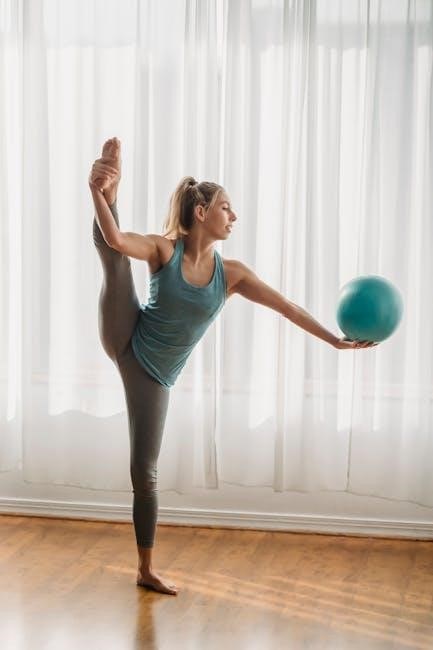
Warm-up Exercises for Standing Leg Workouts
Warm-up exercises are essential before standing leg workouts, preparing muscles and joints for activity, increasing blood flow, and reducing injury risk.
A standing leg exercises PDF should always include dynamic stretches and mobility drills to optimize performance and enhance workout effectiveness.
Prioritize movements that mimic the workout, gradually increasing intensity to prime the legs for the demands ahead, ensuring a safe and productive session.
Dynamic Stretching for Leg Muscles
Dynamic stretching focuses on controlled movements through a full range of motion, preparing leg muscles for exercise far more effectively than static stretching before a workout.
A comprehensive standing leg exercises PDF should detail several dynamic stretches, including leg swings (forward, backward, and lateral) to improve hip mobility and hamstring flexibility.
Walking lunges with a twist engage the core and improve coordination, while high knees and butt kicks increase blood flow to the quads and hamstrings, respectively.
Include torso twists combined with leg swings to enhance rotational mobility and core stability, crucial for balance during single-leg exercises.
Ankle circles and toe taps prepare the ankles for the demands of standing exercises, improving proprioception and reducing the risk of sprains.
Perform each stretch for 30-60 seconds, focusing on controlled movements and avoiding bouncing, which can lead to muscle strain. Remember to breathe deeply throughout.
These dynamic stretches will not only warm up your leg muscles but also improve your overall movement quality, setting the stage for a successful and injury-free workout.
Ankle Mobility Exercises
Often overlooked, ankle mobility is critical for proper form and injury prevention in standing leg exercises, directly impacting balance and stability.
A well-structured standing leg exercises PDF must incorporate exercises to improve dorsiflexion, plantarflexion, inversion, and eversion – the ankle’s full range of motion.
Ankle circles, performed in both directions, gently warm up the joint and increase circulation. Toe raises and heel walks strengthen the calf muscles and improve ankle control.
Alphabet tracing with your foot enhances proprioception and coordination, challenging the ankle to move in various planes. Banded ankle mobilizations further improve range of motion.
Calf stretches, targeting both the gastrocnemius and soleus muscles, are essential for increasing dorsiflexion, allowing for deeper squats and lunges.
Perform each exercise for 10-15 repetitions, focusing on controlled movements and avoiding any pain. Prioritize quality over quantity.
Improved ankle mobility translates to better biomechanics, reduced stress on the knees and hips, and enhanced performance in all standing leg exercises.
Calf Raises – Preparation
Before incorporating calf raises into your standing leg exercises PDF routine, proper preparation is vital to maximize effectiveness and minimize injury risk.
Begin with a dynamic warm-up, including ankle circles and toe taps, to increase blood flow and joint mobility. Gentle calf stretches, holding for 20-30 seconds, prepare the muscles for exertion;
Ensure a stable surface – a flat floor is ideal. You can perform calf raises barefoot or with supportive athletic shoes. A slight bend in the knees throughout the exercise is recommended.
Focus on controlled movements, avoiding bouncing or using momentum. Engage your core to maintain stability and proper posture. Start with bodyweight calf raises to master the technique.
Progress gradually by adding resistance – dumbbells, resistance bands, or a calf raise machine. Maintain a full range of motion, lowering your heels below the level of the step.
Proper preparation ensures optimal muscle activation and reduces the likelihood of strains or cramps. Listen to your body and stop if you experience any pain.
A well-prepared calf will enhance the benefits of this foundational exercise.
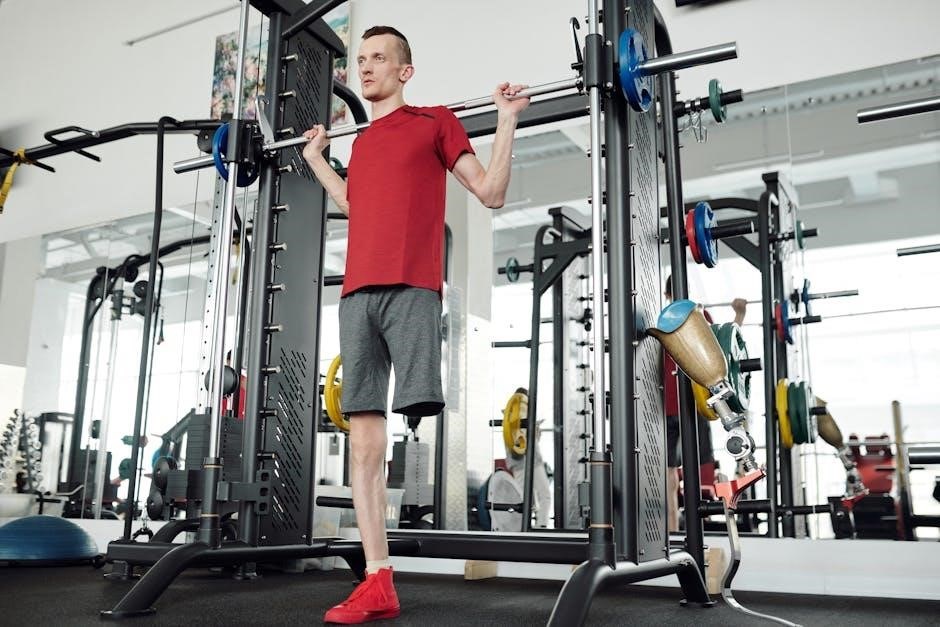
Core Standing Leg Exercises
Core standing leg exercises, detailed in your standing leg exercises PDF, build foundational strength and stability, improving functional movement patterns.
Squats, lunges, and single-leg deadlifts are essential, targeting major muscle groups and enhancing balance, crucial for daily activities and athletic performance.
Step-ups provide a versatile challenge, increasing intensity and promoting coordination, making them valuable additions to any leg workout routine.
Squats – Proper Form and Variations
Squats are a cornerstone of any effective standing leg exercises PDF, building comprehensive lower body strength and power. Proper form is paramount; begin with feet shoulder-width apart, toes slightly outward, and maintain a neutral spine throughout the movement.
Initiate the squat by hinging at the hips, as if sitting back into a chair, keeping your core engaged and chest up. Descend until your thighs are parallel to the ground, or as low as comfortably possible, ensuring your knees track in line with your toes. Drive through your heels to return to the starting position.
Variations within your PDF can include bodyweight squats for beginners, goblet squats holding a dumbbell or kettlebell for added resistance, and jump squats for explosive power. Pause squats, holding at the bottom position, increase time under tension. Remember to prioritize controlled movements and proper technique over depth or weight.
Modifications, like using a chair for assistance, can make squats accessible for all fitness levels. Consistent practice, with attention to form, will yield significant strength and stability gains.
Lunges – Forward, Reverse, and Lateral
Lunges are a versatile addition to any standing leg exercises PDF, targeting quads, glutes, and hamstrings while improving balance and coordination. A well-structured PDF should detail proper form and variations for progressive overload.
Forward lunges involve stepping forward with one leg, lowering your body until both knees are bent at 90 degrees. Maintain a straight back and ensure your front knee doesn’t extend past your toes. Reverse lunges offer a more knee-friendly option, stepping backward instead of forward.
Lateral lunges work the inner and outer thighs, stepping to the side and bending one knee while keeping the other leg straight. These variations can be performed with or without dumbbells for increased intensity. Your PDF should emphasize controlled movements and a stable core throughout each lunge.

Progressions include adding weight, increasing the lunge depth, or incorporating walking lunges. Remember to alternate legs and maintain proper alignment to prevent injury.
Single-Leg Deadlifts – Technique and Progression
Single-leg deadlifts are a challenging yet highly effective exercise for any standing leg exercises PDF, building hamstring and glute strength, improving balance, and enhancing core stability. A comprehensive PDF must illustrate correct technique to minimize risk.
Begin by standing on one leg, keeping a slight bend in the knee. Hinge at the hips, lowering your torso towards the ground while extending the non-supporting leg straight back for counterbalance. Maintain a flat back and engaged core throughout the movement.
Progression starts with mastering the bodyweight version, focusing on controlled movements and maintaining balance. Add dumbbells or kettlebells gradually, increasing the weight as strength improves. Your PDF should detail modifications for beginners, such as performing the exercise with a slightly bent supporting leg.
Focus on feeling the stretch in your hamstring and engaging your glutes as you return to the starting position. Prioritize form over weight to prevent injury.
Step-Ups – Utilizing a Stable Platform
Step-ups are a versatile exercise for inclusion in any standing leg exercises PDF, effectively targeting quads, glutes, and hamstrings while improving functional strength and cardiovascular fitness. A crucial element detailed in your PDF is platform stability – always prioritize a secure, non-slip surface.
Begin by standing facing a stable platform (box, bench, or step). Place one foot firmly on the platform and drive through your heel to lift your body up, extending your leg. Bring the other foot up to meet it, then step down one leg at a time, controlling the descent.
Progression involves increasing the platform height, adding weight (dumbbells or a weighted vest), or performing the exercise with a faster tempo. Your PDF should emphasize maintaining proper form – a straight back and controlled movements – throughout the exercise.
Focus on engaging your glutes and quads with each step, and avoid using momentum to propel yourself upwards. Step-ups are excellent for building unilateral leg strength.
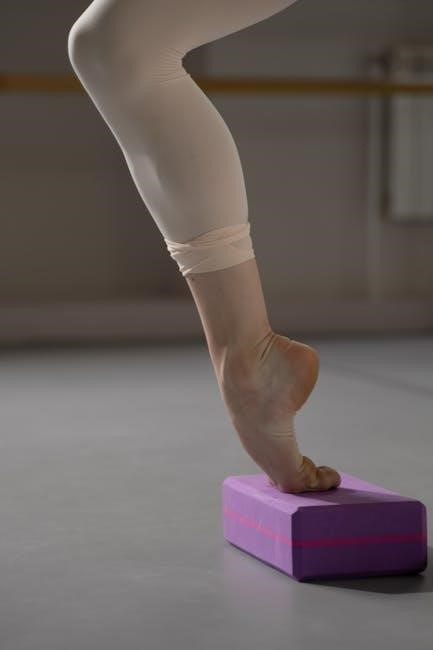
Advanced Standing Leg Exercises
Advanced standing leg exercises, detailed in your standing leg exercises PDF, push limits, building exceptional strength and stability through challenging movements.
These progressions—pistol squats, Bulgarian split squats, and single-leg bridges—demand significant control, balance, and muscular endurance for optimal results.
Nordic hamstring curls, even assisted, are incredibly effective, strengthening the hamstrings and improving overall leg power, enhancing athletic performance.
Pistol Squats – A Challenging Progression
Pistol squats, a hallmark of lower body strength, represent a significant advancement detailed within your standing leg exercises PDF. This single-leg squat requires immense balance, control, and flexibility, making it a challenging yet rewarding exercise.
Beginners should focus on assisted variations, utilizing a support like a TRX strap or a sturdy object to maintain balance during the descent and ascent. Gradually reduce assistance as strength and stability improve. Mastering a controlled descent is crucial before attempting a full pistol squat.
Proper form involves extending one leg straight out in front, keeping the back straight, and lowering the body until the thigh of the standing leg is parallel to the ground. Drive through the heel to return to the starting position. Focus on core engagement throughout the movement to maintain stability.
Include progressions like box pistol squats, where you squat down to a box or bench, to build confidence and strength. Remember to prioritize form over depth, ensuring a safe and effective workout. Consistent practice and dedication are key to mastering this advanced exercise.
Bulgarian Split Squats – Increasing Intensity
Bulgarian split squats, a staple in any progressive standing leg exercises PDF, dramatically increase the intensity of traditional lunges by elevating the rear foot. This unilateral exercise targets the quads, glutes, and hamstrings, demanding significant strength and balance.
To perform, place the top of one foot on a stable bench or platform behind you. Step forward into a lunge, lowering your body until your front thigh is parallel to the ground. Maintain a straight back and engaged core throughout the movement. Drive through the heel of your front foot to return to the starting position.
Beginners can start with a lower platform height and focus on controlled movements. To increase the challenge, use dumbbells or a weighted vest. Variations include adding a pause at the bottom of the movement or performing jump split squats for a plyometric effect.
Proper form is paramount to avoid injury. Ensure your front knee tracks over your ankle and avoid letting it extend past your toes. This exercise is excellent for addressing muscle imbalances and building functional strength.
Single-Leg Glute Bridges – Strengthening the Glutes
Single-leg glute bridges are a fantastic addition to any standing leg exercises PDF, focusing on isolating and strengthening the gluteal muscles while simultaneously improving core stability and balance. This exercise is particularly effective for enhancing hip extension power, crucial for activities like running and jumping.
Begin by lying on your back with knees bent and feet flat on the floor. Extend one leg straight up towards the ceiling. Drive through the heel of your planted foot, lifting your hips off the ground until your body forms a straight line from shoulder to knee. Squeeze your glutes at the top of the movement.
To increase the intensity, add a resistance band around your thighs or hold a dumbbell across your hips. Focus on maintaining a neutral spine and avoiding arching your lower back. Controlled movements are key for maximizing glute activation.
This exercise is beneficial for correcting muscle imbalances and preventing lower back pain. It’s a versatile exercise suitable for all fitness levels.
Nordic Hamstring Curls (Assisted) – Hamstring Strength
Nordic hamstring curls, even in an assisted variation, are a powerful inclusion in a comprehensive standing leg exercises PDF, targeting the hamstrings with eccentric strength training. This exercise is renowned for its ability to reduce hamstring injury risk, a common concern for athletes and active individuals.
Begin by kneeling with your ankles secured – a partner or sturdy object is essential for holding your feet. Slowly lower your upper body towards the ground, resisting the movement with your hamstrings. The slower and more controlled the descent, the greater the benefit.
Assistance is crucial initially; a partner can provide support by gently guiding your descent or providing a push-off to help you return to the starting position. Focus on maintaining a straight line from knees to shoulders throughout the movement.
This exercise builds exceptional hamstring strength and control, improving sprinting speed and overall athletic performance. Start with minimal range of motion and gradually increase it as your strength improves.
Balance and Stability Exercises
Balance and stability exercises are vital components of a well-rounded standing leg exercises PDF, enhancing proprioception and reducing fall risk, especially with age.
These drills improve neuromuscular control, strengthening stabilizing muscles and promoting functional movement patterns for everyday activities and athletic performance.
Incorporating single-leg stances, balance board work, and agility drills will significantly improve your body’s ability to maintain equilibrium and react to changes.
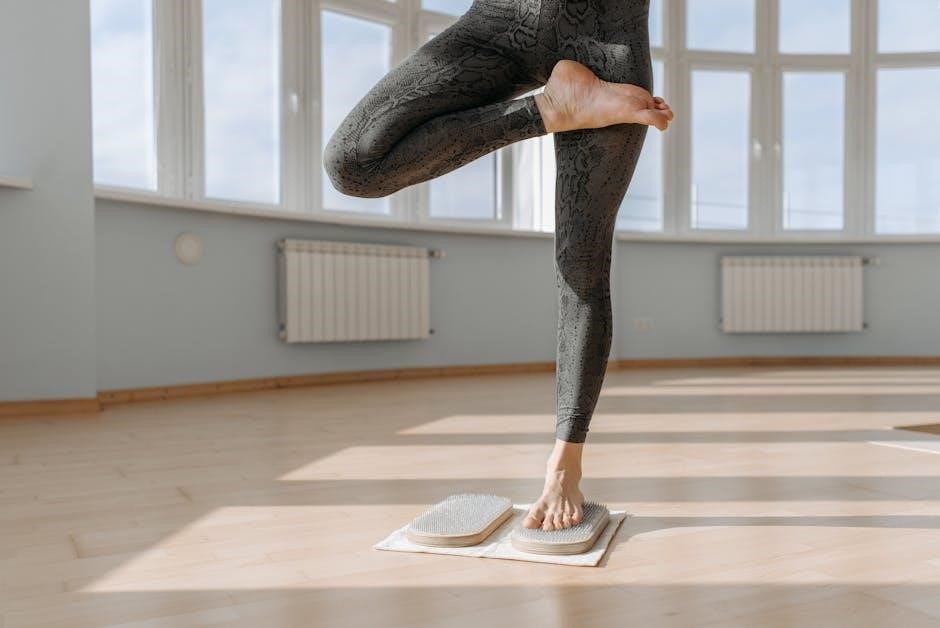
Single-Leg Stance – Holding for Duration
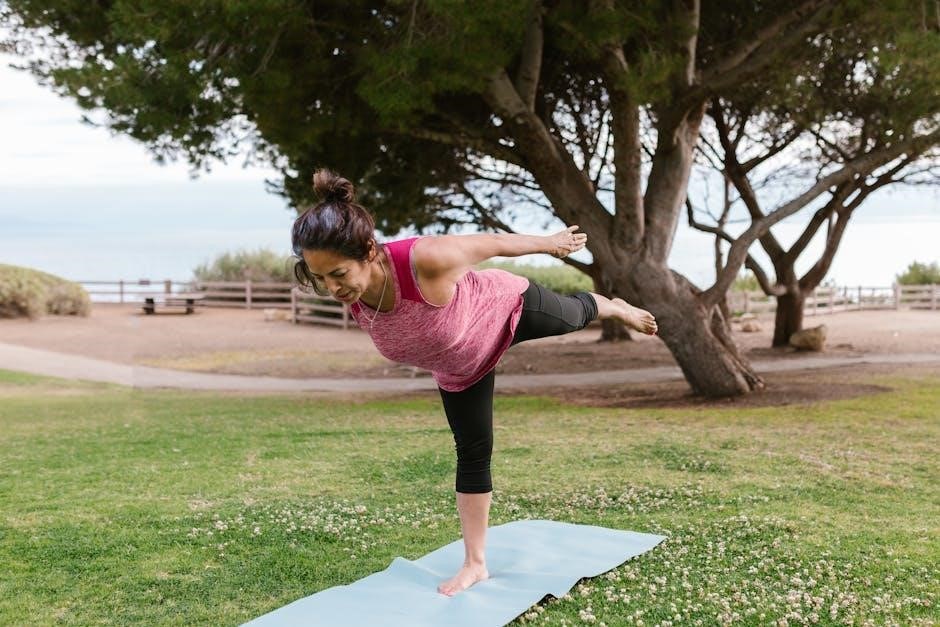
The Single-Leg Stance is a foundational exercise for any standing leg exercises PDF, directly addressing balance and stability – skills that diminish with age but are readily improved with consistent practice.
How to Perform: Begin by standing with feet hip-width apart. Slowly lift one foot off the ground, maintaining a neutral spine and engaged core. Focus your gaze on a fixed point to aid balance. Avoid leaning or swaying excessively.
Progression: Start by holding the stance for 10-15 seconds, gradually increasing the duration to 30-60 seconds as your balance improves. For an added challenge, close your eyes (only if you have sufficient balance to do so safely) or perform the exercise on an unstable surface like a foam pad.
Benefits: This exercise strengthens the ankle, knee, and hip stabilizers, improving proprioception – your body’s awareness of its position in space. Regular practice can boost memory and brain health, as highlighted in recent research, making it a powerful tool for healthy aging.
PDF Integration: Your standing leg exercises PDF should include clear instructions, visual aids (images or videos), and suggested progression guidelines for this exercise.
Balance Board Exercises – Improving Proprioception
Integrating Balance Board Exercises into your standing leg exercises PDF significantly elevates proprioceptive training, enhancing your body’s awareness of its position and movement in space. This is crucial for injury prevention and athletic performance.
How to Perform: Begin with both feet on the board, finding your center of balance. Once stable, progress to single-leg stances, gently rocking the board in various directions. Maintain a slight bend in your standing knee and engage your core.
Progression: Start with short durations (15-20 seconds) and gradually increase the time as your balance improves. Introduce dynamic movements like small squats or reaching motions while maintaining balance.
Benefits: Balance boards challenge your stabilizing muscles, strengthening ankles, knees, and hips. This translates to improved agility, reduced fall risk, and enhanced coordination. As we age, maintaining balance becomes increasingly important for independence.
PDF Integration: Your standing leg exercises PDF should detail safety precautions, proper form, and progressive exercises for balance board use, catering to different skill levels.
Cone Taps – Enhancing Agility and Balance
Cone Taps are a fantastic addition to your standing leg exercises PDF, effectively boosting both agility and dynamic balance. This exercise challenges your neuromuscular system, improving reaction time and coordination – vital for everyday movements and athletic endeavors.
How to Perform: Arrange 4-6 cones in a small circle around your standing foot. Maintaining a slight bend in your knee and engaged core, quickly tap each cone with your other foot, returning to the starting position after each tap. Focus on controlled movements and quick footwork.
Progression: Increase the speed of the taps, widen the cone circle, or perform the exercise on a slightly unstable surface. You can also add a small jump between taps for increased intensity.
Benefits: Cone taps improve ankle stability, enhance proprioception, and build lower body power. They’re a low-impact exercise suitable for various fitness levels, promoting functional movement patterns.
PDF Integration: Your standing leg exercises PDF should include clear visuals demonstrating proper form, variations for different skill levels, and safety guidelines for cone placement.
Exercises for Calf Muscles
Calf exercises are essential for lower leg strength, stability, and power, complementing standing leg workouts within your standing leg exercises PDF.
Strong calves support walking, running, and jumping, improving athletic performance and reducing injury risk, contributing to overall functional fitness.
A well-structured standing leg exercises PDF should include variations like standing and single-leg calf raises, with resistance band options.
Standing Calf Raises – Variations and Technique
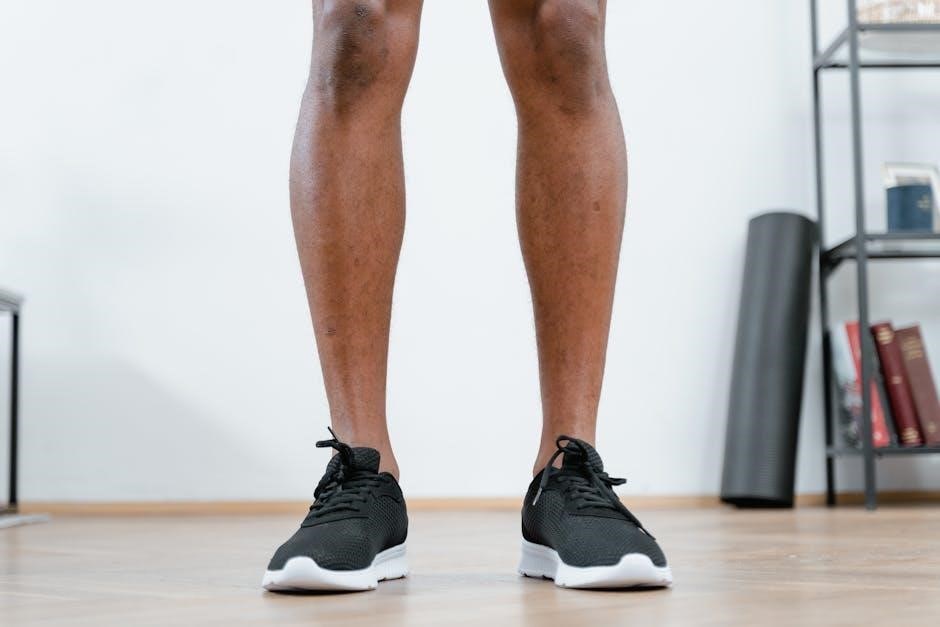
Standing calf raises are a cornerstone exercise for developing strong and defined calf muscles, easily incorporated into your standing leg exercises PDF. Proper technique is crucial for maximizing effectiveness and preventing injury. Begin by standing with feet flat on the floor, shoulder-width apart, and core engaged.
Slowly rise onto the balls of your feet, squeezing your calf muscles at the top of the movement. Hold this contraction for a brief moment before slowly lowering back down to the starting position. Focus on a full range of motion, ensuring a deep stretch at the bottom and a complete contraction at the top.
Variations include adding weight using dumbbells or a barbell across your upper back to increase intensity. You can also perform them on an elevated surface, like a step, to further enhance the stretch. For a more challenging variation, try performing them with limited stability, such as on a balance board. Your standing leg exercises PDF should illustrate these variations clearly.
Remember to maintain a controlled tempo throughout the exercise, avoiding any jerky movements. Aim for 3-4 sets of 12-15 repetitions, adjusting the weight or resistance as needed to maintain proper form.
Single-Leg Calf Raises – Increased Difficulty
Single-leg calf raises represent a significant progression from the standard version, dramatically increasing the challenge to your balance, stability, and calf strength – a valuable addition to your standing leg exercises PDF. This exercise isolates each calf muscle, addressing any imbalances and enhancing overall lower leg development.
To perform, stand on one leg with a slight bend in your knee. You may need to hold onto a stable surface for initial balance assistance, gradually reducing reliance as you improve. Slowly rise onto the ball of your foot, focusing on a controlled contraction of the calf muscle. Hold briefly at the top, then slowly lower back down.
Your standing leg exercises PDF should emphasize maintaining a neutral spine and avoiding any twisting motions. Adding weight, like dumbbells, further intensifies the exercise. Consider performing these near a wall for safety, especially when starting. Aim for 3 sets of 10-12 repetitions per leg.
This exercise demands greater core engagement to maintain balance, contributing to improved stability and functional strength. Prioritize form over weight to prevent injury and maximize results.
Calf Raises with Resistance Band – Adding Intensity
Incorporating a resistance band into your calf raises is a simple yet effective method to amplify the intensity and challenge your calf muscles further – a great inclusion for your standing leg exercises PDF. This modification provides constant tension throughout the entire range of motion, maximizing muscle fiber recruitment and promoting greater strength gains.
Secure a resistance band under your feet, holding the ends in your hands. Position the band to provide resistance as you move through the calf raise. Perform the exercise as you would a standard calf raise, rising onto the balls of your feet while maintaining a controlled tempo. Focus on squeezing your calf muscles at the peak contraction.
Your standing leg exercises PDF should detail band selection based on fitness level; lighter bands for beginners, heavier bands for advanced users. Aim for 3 sets of 15-20 repetitions. Ensure the band remains taut throughout the exercise.
This variation enhances both strength and endurance, contributing to well-rounded lower leg development. Proper form remains crucial to prevent injury and maximize effectiveness.
Cool-down and Stretching
Cool-down and stretching are vital post-workout, reducing muscle soreness and improving flexibility – essential components for your standing leg exercises PDF.
Static stretches, held for 30 seconds, target quads, hamstrings, and calves, promoting recovery and preventing stiffness after intense leg work.
Foam rolling further aids muscle recovery, releasing tension and improving blood flow, enhancing overall leg health and flexibility.
Static Stretching for Leg Muscles
Static stretching is a crucial component of your standing leg exercises PDF cool-down, promoting flexibility and reducing post-workout muscle soreness. Unlike dynamic stretching, static stretches involve holding a stretch in a challenging but comfortable position for a sustained period, typically 30 seconds.
Focus on key leg muscle groups. For the quadriceps, gently pull your heel towards your glutes, keeping your knees aligned. Hamstring stretches can be performed by reaching for your toes, maintaining a slight bend in your knees to avoid overextension. Calf stretches involve leaning against a wall with one leg extended back, heel firmly planted on the ground.
Remember to breathe deeply and consistently throughout each stretch, allowing your muscles to relax and lengthen. Avoid bouncing or forcing the stretch, as this can lead to injury. Prioritize proper form over depth, ensuring you feel a gentle pull, not pain. Incorporating these static stretches into your routine will enhance recovery and improve your overall leg flexibility.
Foam Rolling for Muscle Recovery
Foam rolling is an excellent addition to your standing leg exercises PDF, aiding in muscle recovery and reducing soreness post-workout. This self-myofascial release technique helps break up muscle knots and improve blood flow, enhancing flexibility and range of motion.
Target major leg muscle groups: quads, hamstrings, calves, and glutes. For quads, lie prone and roll from hip to knee. Hamstrings benefit from rolling while seated, focusing on the back of the thigh. Calves are best rolled while seated or kneeling, and glutes by sitting on the roller and crossing one leg over the other.
Apply moderate pressure and roll slowly, pausing on tender spots for 20-30 seconds. Avoid rolling directly over joints or bones. Foam rolling can be uncomfortable initially, but the discomfort should decrease with consistent use. Incorporating foam rolling into your routine will accelerate recovery and prepare your legs for future workouts.
Creating a Standing Leg Workout PDF
A well-structured PDF enhances accessibility and adherence to your standing leg exercise plan, offering clear instructions and visual aids for optimal results.
Organize exercises logically, including warm-up, core workout, and cool-down sections, ensuring a progressive and safe training experience for all users.
Detailed exercise descriptions, accompanied by illustrations or photos, are crucial for proper form and technique, minimizing injury risk and maximizing effectiveness.
Structuring Your PDF for Clarity
A logically organized PDF is paramount for user experience and effective workout implementation. Begin with a concise introduction outlining the benefits of standing leg exercises and the PDF’s purpose. Follow this with a clear table of contents, allowing users to quickly navigate to specific exercises or sections.
Categorize exercises by difficulty level – beginner, intermediate, and advanced – enabling users to select appropriate routines based on their fitness level; Within each level, group exercises by muscle focus (quadriceps, hamstrings, glutes, calves) for targeted training.
Each exercise should have its own dedicated page or section, including a descriptive title, detailed step-by-step instructions, and clear visual aids (illustrations or photographs). Consider adding modifications for different fitness levels or limitations. Include a section on warm-up and cool-down routines, emphasizing the importance of preparation and recovery. Finally, a disclaimer regarding safety and consulting a healthcare professional is essential.
Utilize headings, subheadings, and bullet points to break up text and improve readability. Consistent formatting throughout the PDF will enhance its professional appearance and usability.
Safety Considerations and Disclaimer
Prioritizing safety is crucial when performing standing leg exercises. Always consult your physician before starting any new workout routine, especially if you have pre-existing health conditions. Proper form is paramount; prioritize technique over the number of repetitions. Begin with a thorough warm-up to prepare muscles and joints for activity.
Ensure you have adequate space and a stable surface to perform exercises. Use a mirror to monitor your form, or record yourself to identify areas for improvement. Listen to your body and stop immediately if you experience any pain. Modify exercises as needed to accommodate your fitness level and limitations.
This standing leg exercises PDF is for informational purposes only and does not constitute medical advice. The author and publisher disclaim any liability for injuries or damages resulting from the use of this information. Users assume full responsibility for their safety and well-being while performing these exercises.
Remember to stay hydrated and cool down properly after each workout. Gradual progression is key to avoiding injury and maximizing results.